

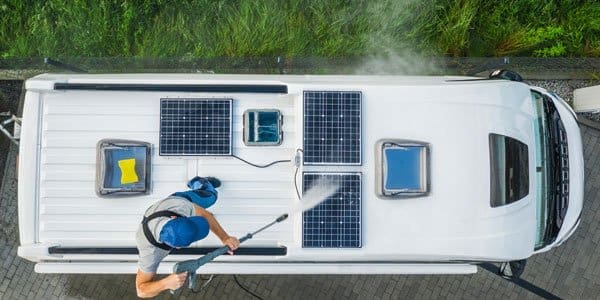
Getting your RV in Tip-Top Shape
Need help to prepare your upcoming adventures? Check out this simple yet efficient checklist!
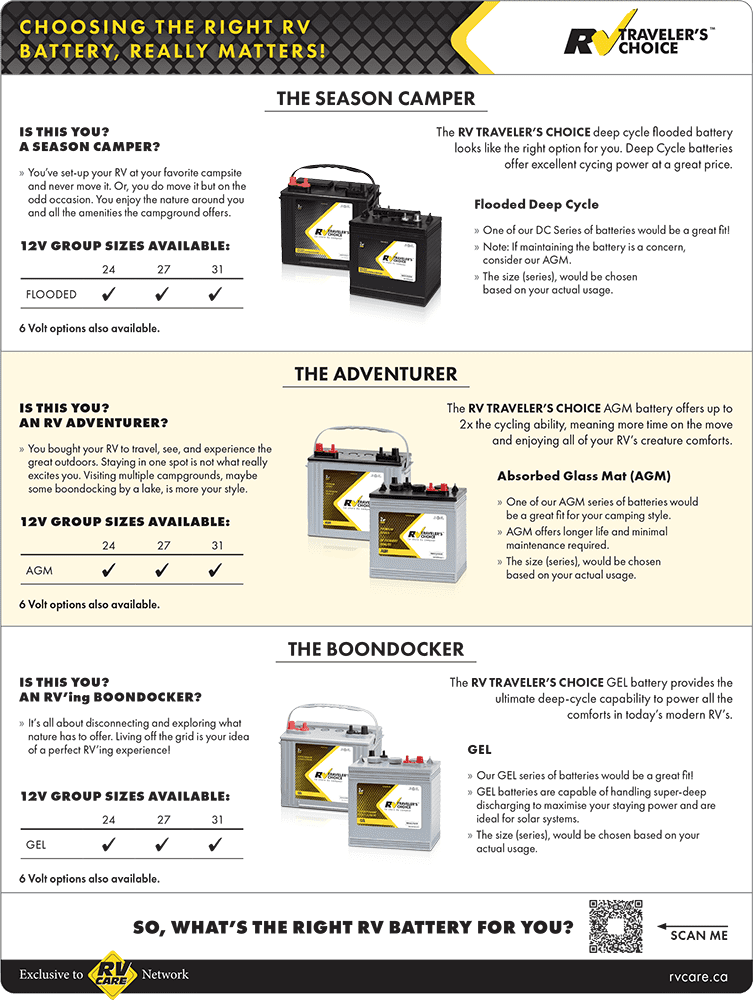
learn moreTravel Trailers and Motorhomes come in a multitude of sizes, with varying on-board devices that require different levels of power.
Therefore, understanding your RV’s specific power requirements based on your RVing lifestyle is crucial for determining the correct battery system.
Batteries may look the same on the outside, but they can be very different on the inside.
That’s why it’s critically important you only use deep cycle batteries to power your RV’s on-board equipment and electronics.
Automotive-style batteries used for engine starting are not designed to support the sustained power draws of fridges, microwaves, TVs, satellite dishes, electric pumps, cell phone chargers and everything else that plugs in and turns on inside your RV.
RV Care Traveler’s Choice deep cycle batteries are optimized for RV use.
They will last much longer and deliver more reliable performance than regular automotive batteries.
For larger RVs with many electronic devices tied into your battery system, our AGM and gel batteries will provide a more premium power solution to support those extra power demands.
AGM and gel batteries are completely interchangeable with regular flooded batteries, and their fully sealed, never add water design eliminates the need for periodic watering.
If you will have access to AC power to recharge your battery system, this question is not as critical as if you were going completely “off the grid”.
If your battery system is not large enough to accommodate your power needs, your family could suddenly be left in the dark.
No one wants to end their holiday like that!
As a rule of thumb, your battery system should have enough capacity to provide at least twice the expected power draw required before the batteries will be recharged.
Your RV Care Dealer can help you estimate your power demands and recommend the right sized battery system to ensure you have adequate power throughout your entire trip.
To maximize battery life, your battery system should not be discharged more than 50% between recharges.
That’s why it’s good practise to fully recharge your battery system after every trip, regardless of how long the batteries were in use.
It’s always a good idea to do a quick check of your battery system before heading out on the road. A little preventive maintenance ahead of your trip will help ensure a safe and hassle-free vacation*.
Here is a quick checklist of things you should visually check to help ensure your batteries are in good working order.
*Important note: When handling batteries be sure to wear protective gloves and eyewear. Battery electrolyte is highly acidic and can burn through skin and clothing. If the electrolyte should contact skin or eyes, flush extensively with large quantities of cool water and seek medical attention as soon as possible.
Flooded deep cycle batteries can lose some of their water through evaporation as the battery heats up during the recharge process.
This is part of a flooded battery’s normal operation, but it means that the water level inside each battery cell must be checked on a regular basis and topped up as necessary*.
Always use distilled water and never add water past the fill line inside each battery cell.
ALWAYS add water to a battery after it has fully recharged and cooled down. NEVER add water to a battery before recharging it.
The water level will rise as the battery is being charged, so adding water while the battery is discharged could cause it to overflow and lose some of its acid during the recharge process.
This will reduce the power-generating capability of the battery.
IMPORTANT: Never check the water levels of a battery before the battery has fully cooled. Recharging a battery causes it to heat up. Removing a vent cap to access the water reservoir could therefore cause the battery to spew acid and cause serious injury.
NEVER CHARGE A FROZEN BATTERY. Doing so may cause the battery to explode. Always allow a battery to come up to room temperature before recharging it.
*Important note: When handling batteries be sure to wear protective gloves and eyewear. Battery electrolyte is highly acidic and can burn through skin and clothing. If the electrolyte should contact skin or eyes, flush extensively with large quantities of cool water and seek medical attention as soon as possible.
Note that AGM and gel batteries are fully sealed and maintenance-free, which means they never need to be watered. These batteries are therefore a great alternative to regular flooded batteries for individuals who are not comfortable with working around batteries.
How long your batteries will last depends on many factors, including how often you use them, how much power is removed from them on a regular basis, their average operating temperature, how they are maintained and how they are stored during the off-season.
On average, you can expect your battery system to last 2-3 years or perhaps longer when properly sized for your needs and adequately maintained.
If your batteries are two years or older, we recommend you ask your local RV Care Dealer to check battery state of health at the beginning of each season, as well as on every service visit. They can give you a reliable estimate of how much longer you can expect your batteries to last.
For larger RVs with many electronic devices tied into your battery system, our AGM and gel batteries will provide a more premium power solution to support those extra power demands. This helps extend battery service life so that you get the best value for your power investment.
CANADA IS BEAUTIFUL, LET’S KEEP IT THAT WAY!
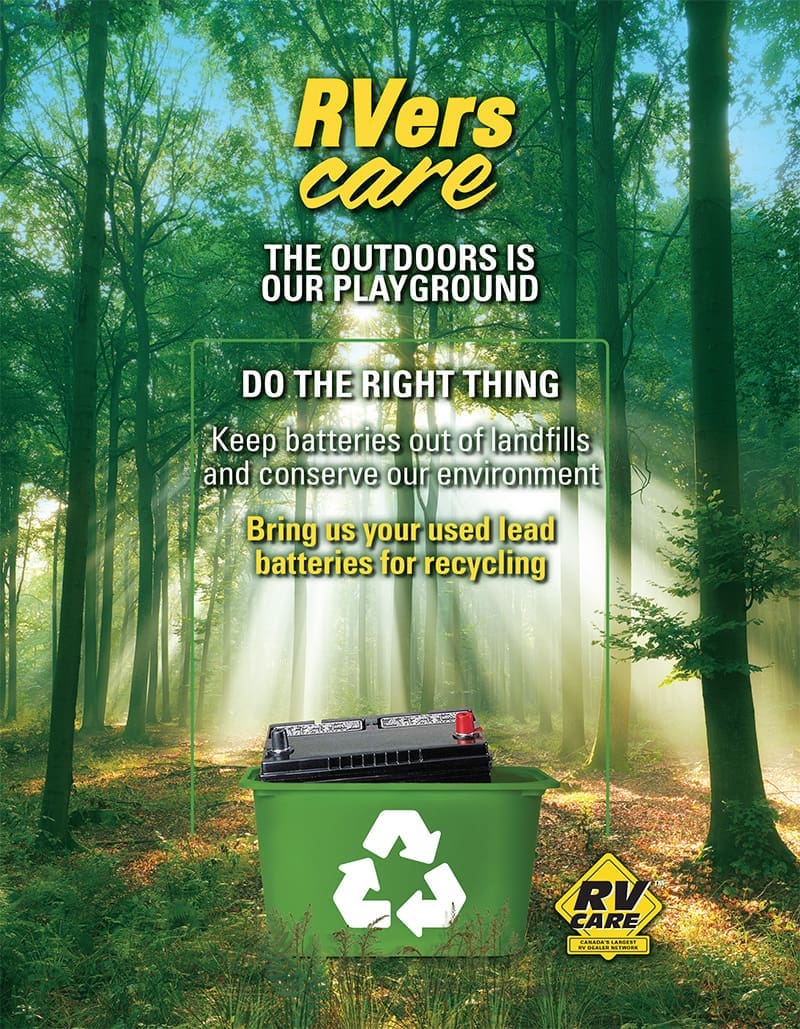
Let’s keep batteries out of our Canadian landfills. When you purchase RV Traveler’s Choice batteries, you can return your used RV batteries for a $15 credit per battery, which you can put towards the cost of your new battery.
WHY RECYCLE? THE FUTURE BELONGS TO ALL OF US!
Did you know that lead batteries are the most recycled consumer good on the planet – more than glass, paper or plastic!
Not only that, but virtually 100% of a lead battery is fully recyclable.
When you bring your used battery to an RV Care dealer, you are contributing to a great cause.
Together we can keep batteries out of landfills and conserve our environment.
Batteries naturally self-discharge while not in use. The rate at which this happens depends on battery type and ambient temperature – cold will slow the process down and heat will speed it up.
When storing your battery over the winter months, you need to minimize the degree of discharge in order to keep it in good working order. That’s because when batteries sit in a partially discharged state, the lead sulfate on the battery plates start to crystallize and harden. (This process is known as “plate sulfation”.) Once fully crystallized, that portion of the plate is no longer capable of generating power. Should too much plate area become crystallized, the battery may no longer be able to generate enough power for your RV needs come Spring.
Remove any corrosion using a mixture of baking soda and water, and then clean and dry the top of the battery. This will eliminate potential discharge paths.
Need help to prepare your upcoming adventures? Check out this simple yet efficient checklist!
learn more
Plans to head south for a warmer winter? Read through our advice before begining your snowbirding adventure…
learn more
We’re confident that you will see the added value and will want to use RV Traveler’s Choice products and take our Extra Mile Rewards along with you on your next camping adventure.
learn more
Choosing the right battery and caring for it properly is an important task. There is tremendous value in having the right Premium RV Battery in your rig.
learn more
Want to take an RV road trip adventure, but don’t know where to start?
Check out our tips for planning a great RV trip route.
learn more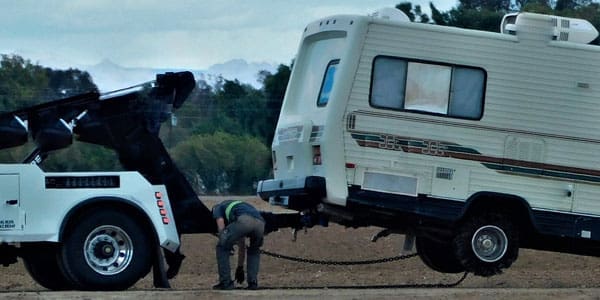
The number one priority of the RV Care Network of dealers is to treat traveling customers as one of their own. Getting you back on the road as quickly as possible to safely complete your trip when you’re just out of luck…
learn more